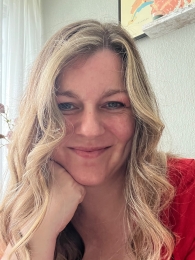
Josanne van Westrienen LLM

Language is never neutral. Especially not in criminal law.


l research how language shapes guilt and innocence in criminal proceedings, from the meaning of "yes" to the challenges of multilingual legal analysis. On this page, you'll find my research focus, my background, and how working across languages informs everything I do.

About me

I'm Josanne, a Dutch jurist (LLM) and researcher in legal linguistics. I studied law at the Open University and French language and culture at Leiden University, where I also completed coursework in legal French. My German language studies include historical linguistics, psychology of language, and coursework in criminal law and civil law at FernUniversität Hagen.

I work in five languages: Dutch, English, French, German, and Swiss German. This multilingual foundation allows me to examine how legal language functions - and fails - across linguistic and cultural boundaries.

My path to legal linguistics wasn't a pivot, it was an inevitability. I've been fascinated by both language and criminal law for as long as I can remember. Legal linguistics is where those two passions finally have a shared home.

I'm currently working towards formalising my research in a PhD trajectory, in conversation with potential supervisors. I have upcoming conference presentations on my research. Alongside my own research, I coach (law) students through every stage of the academic writing process, from planning and literature review to structuring arguments and final writing. It's the same set of skills, applied in two directions.

My research

Language shapes every aspect of criminal law - from witness testimony to consent, from translation errors to legal interpretation. I focus on jurilinguistics in criminal law, examining how linguistic nuance can determine legal outcomes.

My LLM thesis examined the criminal preparatory phase in a comparative analysis of Dutch and German law. My current research (for my bachelor's degree in French language and culture) takes a different angle: how the French, German, and Italian versions of Article 190 of the Swiss Penal Code each construct the notion of consent linguistically. The same law, three languages, three constructions of the same legal reality.

And yet legal language is rarely examined with the same scrutiny as legal reasoning. A poorly translated witness statement, an ambiguous statutory term, a consent provision that reads differently in French than in German -  these are not marginal concerns. They are the difference between justice and its absence

This comparative approach matters because legal language is never merely descriptive. It constructs reality, assigns responsibility, and shapes who is heard - and who is not.

Research themes

Consent & language

How the legal meaning of "yes" and "no" varies across jurisdictions and languages, and why that variation matters in criminal proceedings.

Multilingual & comparative analysis

Primary focus on Dutch, French, and German. Examining how the same legal concepts are constructed differently across languages, legal systems, and jurisdictions.

Criminal proceedings

The role of language in shaping guilt, innocence, and credibility, from police interviews to courtroom testimony.

Translation & justice

What happens when legal meaning gets lost or distorted in translation, and the consequences for defendants and victims.

Jurilinguistics

The field at the intersection of linguistics and law; studying legal language as a living, consequential system.

Support my work

Independent research takes time and resources. If you'd like to support this work, I'd be grateful. Monthly supporters help make sustained research possible and as a thank you, I share early access to my writing and occasional updates about the work your support enables.